Writing a Formal Email in English for School
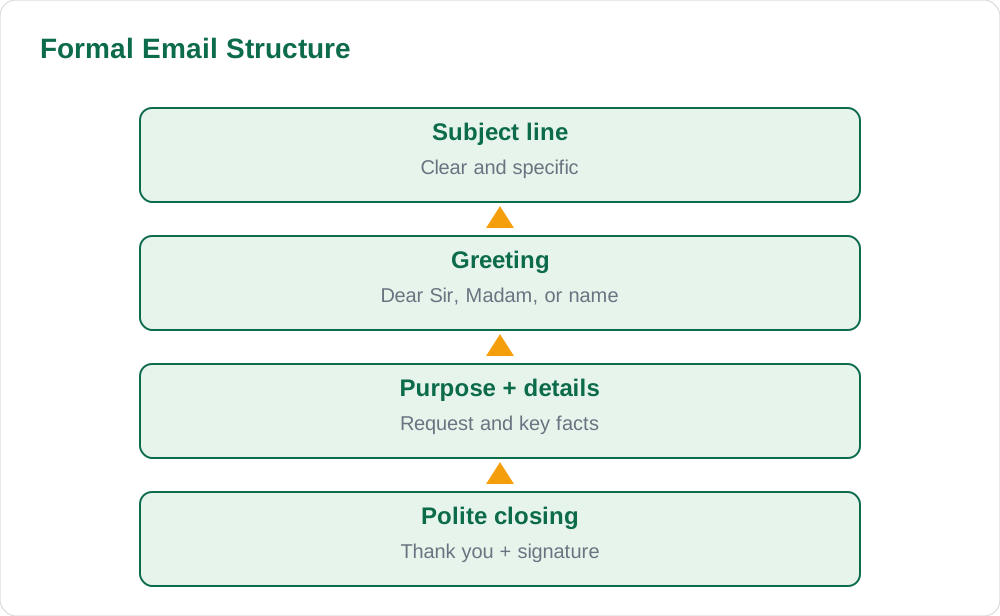
Pupils often need to email a teacher, principal, or school office: to ask for leave, request a document, explain an absence, or ask about an assignment. The writing formal email English school pupils need is not complicated, but it does follow conventions that casual messages ignore. A formal email has a clear subject line, a polite greeting, a short statement of purpose, the necessary details, and a courteous closing. This guide walks you through each part with examples, shows you the tone to use, and lists the mistakes that make an email sound rude or confusing. With this structure, you can write any school email in five short paragraphs or fewer.
Subject Lines That Get Opened and Understood
The subject line is the first thing the reader sees, and it decides whether your email is read quickly or ignored. A good subject line names the topic and, if relevant, your class or roll number. Request for Leave: Class 8, Roll 12 is clear. Leave Application is vague. Hi is not a subject line at all. Keep the subject line short, specific, and factual.
Avoid subject lines in all capital letters, which look like shouting, and avoid vague words such as Important or Urgent unless the matter truly is urgent. If you are replying, keep the original subject line so the reader can follow the thread. A clear subject line respects the reader's time and makes your email easy to find later.
Greeting, Purpose, and Details
Begin with a polite greeting: Dear Sir, Dear Madam, Dear Mr. Ahmed, or Dear Ms. Fatima. Use Dear, not Hi or Hello, in formal school emails. If you do not know the name, Dear Sir or Madam is acceptable. After the greeting, state your purpose in the first two sentences. I am writing to request leave for two days because I am unwell is far better than a long introduction that buries the request.
Then give only the details the reader needs: dates, class, roll number, and any attached documents. Put the most important detail first. If you are requesting leave, give the dates and the reason. If you are asking about homework, name the subject, the date it was given, and what you need. Keep paragraphs short. One idea per paragraph makes your email easy to scan and easy to answer.
- Greeting: Dear Sir, Dear Madam, or Dear Mr. or Ms. plus surname.
- Purpose: state your request in the first two sentences.
- Details: dates, class, roll number, and attachments.
- Length: aim for three to five short paragraphs.
Tone: Polite, Clear, and Direct
Formal does not mean complicated. Use simple, polite sentences. I would be grateful if you could is polite and standard. I want you to is blunt and can sound demanding. Please is essential in requests. Thank you for your time and consideration is a courteous way to close the body of the email. Avoid slang, emojis, and abbreviations such as plz, u, or asap in formal emails.
Be direct about what you need. Vague emails create extra work because the reader must reply to ask for missing details. Instead of writing I need help with something, write Could you please explain question 3 from yesterday's English homework? The clearer your request, the faster you will get a useful reply. If you are apologising, apologise briefly and move on. I apologise for the late submission is enough; a long apology distracts from the solution.
Closing, Signature, and Attachments
Close with a polite line and a formal sign-off. Thank you for your consideration. Yours sincerely, followed by your full name, class, and roll number, is standard for school emails. Yours faithfully is used when you addressed the reader as Dear Sir or Madam without a name. Avoid informal closings such as Cheers, Bye, or Take care in formal emails.
If you attach a document, mention it in the body: I have attached my medical certificate for your reference. Check that the attachment is actually attached before sending. Name files clearly, such as Leave-Application-Class8-Roll12.pdf, rather than Document1. Before sending, reread the email once for spelling, dates, and tone. A quick check prevents most embarrassing mistakes.
A Model Email and a Checklist
Here is a short model. Subject: Request for Leave: Class 8, Roll 12. Dear Sir, I am writing to request leave for two days, Monday and Tuesday, because I am unwell. I have attached a note from my parents. I would be grateful if you could excuse my absence and share any homework I miss. Thank you for your consideration. Yours sincerely, Ayesha Khan, Class 8, Roll 12. This email is short, polite, and complete.
Use this checklist before sending: Is the subject line clear? Is the greeting formal? Is the purpose in the first two sentences? Are dates and details correct? Is the tone polite? Is the attachment mentioned and attached? Is the signature complete? If you can answer yes to all seven, your email is ready. For more writing skills, see building arguments and writing natural dialogue, or browse solved notes on the solved books page.
AI Help: Muse AI
Muse AI is Meta's personal AI assistant, and it can help with drafting a polite formal school email by checking your subject line, greeting, and closing. Muse AI does not give official Sindh Textbook Board answers — always verify against your Sindh Textbook Board book and your teacher.
Join Muse with invite code LTGSWD — in the Muse app, go to Settings > Redeem token and enter the code.
Disclosure: LTGSWD is the author's Muse invite code.
5 key points you must know
- A clear subject line names the topic and class or roll number.
- State your purpose in the first two sentences.
- Use polite forms: I would be grateful, please, thank you.
- Give only the details the reader needs, one idea per paragraph.
- Close with Yours sincerely plus name, class, and roll number.
Frequently asked questions
How should I start a formal school email?
Use Dear Sir, Dear Madam, or Dear Mr. or Ms. plus surname. Avoid Hi or Hello in formal school emails, and state your purpose in the first two sentences.
How long should a formal email be?
Three to five short paragraphs are enough for most school emails. Keep it focused: greeting, purpose, details, and polite closing.
Should I use Yours sincerely or Yours faithfully?
Use Yours sincerely when you addressed the reader by name. Use Yours faithfully when you used Dear Sir or Madam without a name.
What should I check before sending?
Check the subject line, dates, spelling, tone, and attachments. Confirm the attachment is actually attached and mentioned in the body.
Solved notes — preview free
These guides work best with the solved exercises. Preview the solved notes free on this website — 119 solved notes for Classes 6–10 in Sindhi, Urdu, English and Arabic medium. Or browse the full solved notes catalogue for your class and medium. New solved notes are added regularly — check the catalogue for coming-soon books.