Themes in Shah Abdul Latif Bhittai's Poetry for Pupils

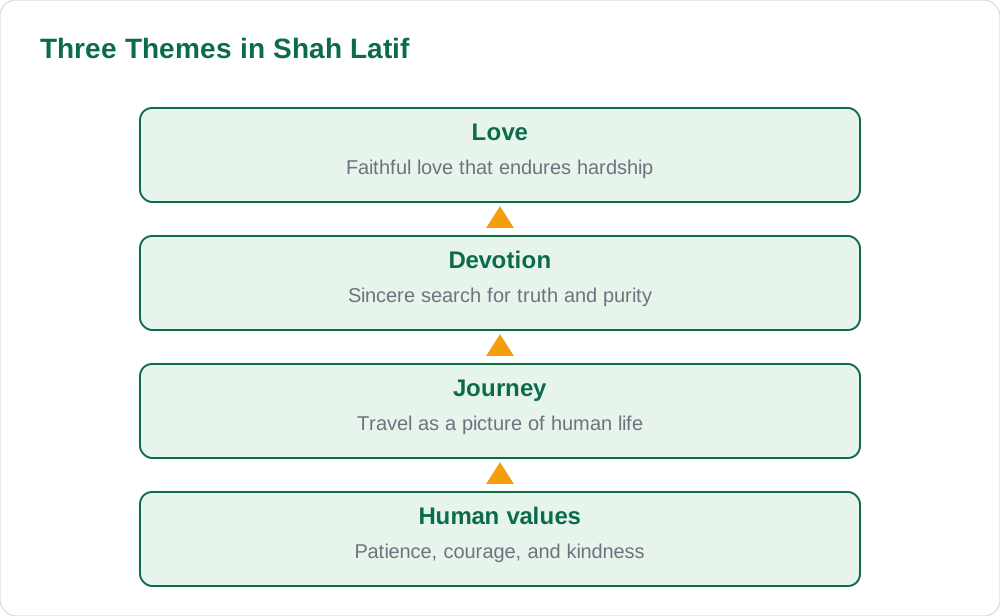
Shah Abdul Latif Bhittai is the most loved poet of Sindh. His poetry is sung at shrines, taught in schools, and quoted by elders in daily conversation. For pupils, the themes of Shah Abdul Latif Bhittai poetry themes pupils need to understand can be described in three simple words: love, devotion, and journey. His heroines travel far, wait patiently, and stay faithful. His verses praise truth, kindness, and the search for what is pure. This guide introduces his life in brief, explains his main themes with examples pupils can follow, and shows how to write about his poetry in school answers. You do not need difficult philosophy to appreciate Shah Latif. You need a clear picture of the traveller, the beloved, and the road between them.
Who Was Shah Abdul Latif Bhittai
Shah Abdul Latif Bhittai lived in Sindh and is known as the poet of the people. He travelled across the land, listened to stories of fishermen, farmers, and women, and turned those stories into poetry. His great collection is called Shah Jo Risalo, which gathers his verses into chapters named after heroines and themes. Each chapter, called a Sur, carries its own mood and message. Pupils do not need to memorise every Sur. They need to know that Shah Latif used familiar Sindhi stories to talk about deep human truths. His poetry speaks of the desert, the river, the sea, and the village, because those were the worlds his listeners knew.
His language is simple and musical. He uses images from daily life: a woman waiting at night, a traveller crossing the desert, a boat on a stormy river, a mother calling her child. These images make his poetry easy to feel even when the deeper meaning takes time to understand. In school, you will meet selected verses, not the whole Risalo. Read each selected verse slowly, as the beit method teaches. The guide on reading Sindhi poetry explains how to work through one beit at a time. With Shah Latif, the first reading gives you the story, and the second reading gives you the deeper message.
Love That Asks for Faithfulness
The strongest theme in Shah Latif poetry is love that stays faithful through hardship. His heroines, such as Sasui, Marvi, and Moomal, love deeply and refuse to give up. Sasui walks through the desert in search of her beloved. Marvi refuses a palace and longs for her village. Moomal waits with patience and dignity. These stories are not only romances. They teach that true love means loyalty, patience, and sacrifice. A pupil writing about this theme should give one story example and one lesson. For example, Sasui desert journey shows that love gives courage to face danger without complaint.
This love is also a picture of a larger love: the love of the human heart for truth and for God. Teachers often explain that in Shah Latif, the beloved can mean both a human beloved and a spiritual goal. Pupils should not feel confused by this double meaning. In a school answer, you can say that the verse describes human love on the surface and points to spiritual love beneath it. That sentence shows understanding without claiming too much. Avoid writing that every verse has a hidden meaning. Some verses simply praise the beauty of faithfulness itself, and that is enough.
Devotion and the Search for Truth
The second theme is devotion. In Shah Latif, devotion means sincerity of heart. A devotee does not show off. A devotee serves, waits, and keeps the heart clean. Many verses praise people who are poor in wealth but rich in love. They warn against pride, greed, and empty show. For pupils, devotion can be explained in simple terms: doing the right thing because it is right, not because others are watching. A pupil who studies honestly when no teacher is present practises the same sincerity Shah Latif praises. This link to daily life makes the theme easy to remember and easy to write about.
Devotion in Shah Latif also includes respect for all people. His poetry speaks against hatred and division. He teaches that the same divine light shines in every heart. In school answers, pupils can connect this theme to kindness toward classmates, respect for elders, and honesty in dealings. Avoid turning a short answer into a long religious lecture. One clear sentence about sincerity, supported by one verse image, is stronger than many general sentences. If your textbook gives a verse about the heart, explain the heart image first, then the lesson of sincerity.
Journey as a Picture of Life
The third theme is the journey. In Shah Latif, the road, the desert, the river, and the sea are pictures of human life. The traveller faces heat, thirst, darkness, and loneliness, just as people face problems in life. The journey is hard, but it is also the path to growth. Sasui desert walk teaches that the road itself changes the traveller. She becomes stronger, more patient, and more sincere with every step. Pupils can use this theme in answers about courage and patience. The journey image also explains why Shah Latif poetry feels so alive: it is full of movement, walking, searching, waiting, and arriving.
When you analyse a journey verse, ask three questions. Who is travelling, what hardship does the traveller face, and what does the traveller gain. The answer to the third question is usually the message. The traveller may gain nearness to the beloved, peace of heart, or a deeper understanding. In your answer, describe the journey image in one sentence, then state the lesson in one sentence. Do not describe every stage of the journey in detail. Choose the stage that best shows the lesson. This focus keeps your answer short and powerful.
How to Write About Shah Latif in Exams
A good exam answer on Shah Latif follows a simple order. First, name the Sur or the verse and its story in one or two sentences. Second, explain the image in your own words. Third, state the theme in one sentence. Fourth, give one lesson for daily life. For example, a verse about Sasui can be answered as the story of a faithful traveller, the image of a lonely desert road, the theme of faithful love, and the lesson of patience in hardship. This four-step answer is complete and easy to mark. It shows that you understood both the story and the message. Avoid writing a long biography of the poet when the question asks about a theme. A brief line about Shah Latif is enough.
Practise with one Sur at a time. Read the selected verses, mark the images of road, river, and heart, and write one theme sentence for each verse. Compare your sentences with your teacher notes. For more practice with poetry explanation, see the tashreeh method guide. You can find Shah Latif selections in your class book through the books page. Remember that Shah Latif poetry is meant to be felt as well as studied. Reading a verse aloud, slowly, often brings the meaning closer than silent reading alone.
- Name the story in one or two sentences.
- Explain the image in your own words.
- State the theme in one clear sentence.
- Add one lesson for daily life.
- Keep biography short when the question asks about a theme.
AI Help: Muse AI
Muse AI is Meta's personal AI assistant, and it can help with explaining one Shah Latif image, such as the desert journey, in simple pupil language. Muse AI does not give official Sindh Textbook Board answers — always verify against your Sindh Textbook Board book and your teacher.
Join Muse with invite code LTGSWD — in the Muse app, go to Settings > Redeem token and enter the code.
Disclosure: LTGSWD is the author's Muse invite code.
5 key points you must know
- Shah Latif used familiar Sindhi stories to teach deep truths.
- Faithful love is his strongest theme, shown by Sasui, Marvi, and Moomal.
- Devotion means sincerity of heart, not show or pride.
- The journey is a picture of human life and growth.
- Exam answers need story, image, theme, and one daily lesson.
Frequently asked questions
What is Shah Jo Risalo?
It is the collection of Shah Abdul Latif Bhittai poetry, organised into chapters called Surs, each with its own mood and theme.
Why does Shah Latif use heroines like Sasui and Marvi?
Their stories of faithfulness and courage make deep lessons about love, patience, and truth easy to feel and remember.
Is the beloved in Shah Latif only a person?
Often the beloved also points to a spiritual goal, such as truth or nearness to God, while the surface story stays human.
How should I start an answer on Shah Latif?
Name the verse and its story briefly, then explain the image and state the theme in one clear sentence.
Solved notes — preview free
These guides work best with the solved exercises. Preview the solved notes free on this website — 119 solved notes for Classes 6–10 in Sindhi, Urdu, English and Arabic medium. Or browse the full solved notes catalogue for your class and medium. New solved notes are added regularly — check the catalogue for coming-soon books.