A Simple Biology Glossary for Sindhi-Medium Pupils
Biology has many long words, but most of them describe simple living things and processes you already know. A cell, a root, a heartbeat: these are everyday realities with fancy names. This glossary explains common biology terms in plain Sindhi with one example each, so Sindhi-medium pupils can revise quickly, understand deeply, and answer in the paper's language without fear.
How to Use This Glossary
Do not try to memorise this glossary in one sitting. Use it as a revision companion: when a lesson introduces a term, find it here, read the plain Sindhi explanation, and picture the example. Then close the book and explain the term in your own words. If you can explain it without looking, you know it.
Keep your own copy in the back of your biology notebook. Add new terms as your lessons introduce them, always with one example. Before a test, revise five terms at a time by covering the English term and recalling it from the Sindhi explanation. For note-making habits that support this, see how to make notes from Sindh Textbook Board books.
- Read the Sindhi explanation first, then the English term.
- Picture the example before moving to the next term.
- Test yourself by covering the English column.
- Add new terms from your own lessons as you meet them.
Cells, Tissues, and the Building Blocks of Life
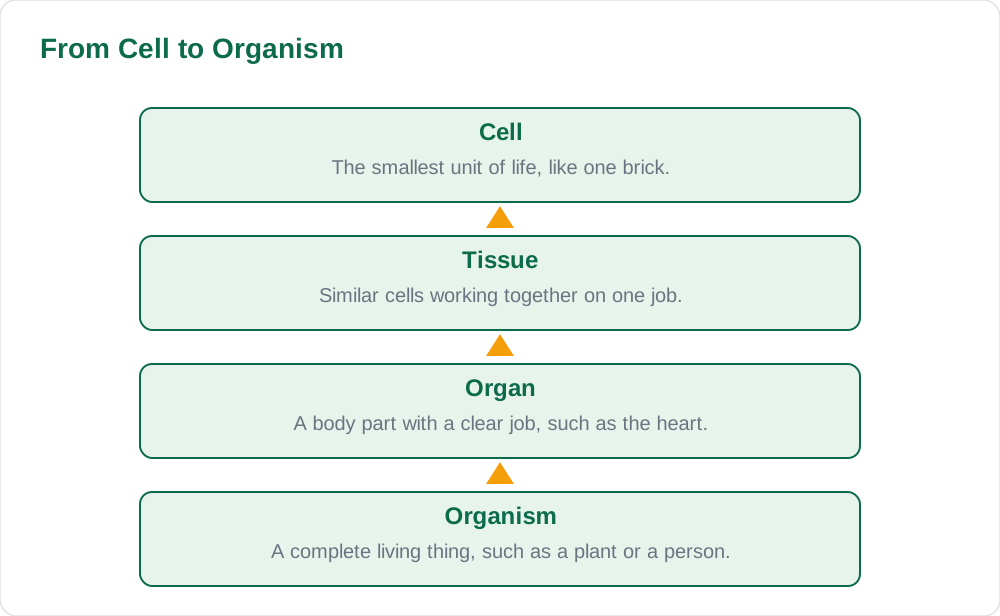
Cell: the smallest unit of life. Every plant and animal is made of cells, just as a wall is made of bricks. Example: a leaf is made of thousands of tiny cells working together. Tissue: a group of similar cells doing one job. Example: muscle tissue in your arm helps you lift. Organ: a part of the body with a clear job, made of tissues. Example: the heart pumps blood around the body.
Organism: a complete living thing, such as a plant, an animal, or a person. Example: a mango tree is one organism, and so is a goat. Growth: the increase in size and development of a living thing. Example: a seedling growing into a wheat plant shows growth. These five terms form the ladder of life: cell, tissue, organ, organism, and growth.
Plants: Roots, Leaves, and Photosynthesis
Root: the part of the plant that grows underground, holds the plant firm, and takes in water. Example: the roots of a cotton plant drink water from the soil. Stem: the part that holds the plant up and carries water and food. Example: a wheat stem carries water from roots to leaves. Leaf: the flat green part where the plant makes food. Example: a mango leaf uses sunlight to make food for the tree.
Photosynthesis: the process by which a green plant uses sunlight, water, and air to make its own food. Example: a cotton plant making food on a sunny day. Chlorophyll: the green colour in leaves that captures sunlight for photosynthesis. Example: the green in a spinach leaf is chlorophyll at work. Respiration in plants: the process by which plants release energy from food. Example: a plant using stored food at night to stay alive.
- Root: takes in water and holds the plant firm.
- Stem: carries water and food around the plant.
- Leaf: makes food using sunlight.
- Photosynthesis: plant making food from sunlight, water, and air.
Animals and Humans: Heart, Lungs, and Digestion
Heart: the organ that pumps blood around the body. Example: your heart beats faster when you run. Lungs: the organs that take in air and give the body oxygen. Example: your lungs fill when you take a deep breath. Blood: the liquid that carries food and oxygen around the body. Example: blood carries food from digestion to every part of the body.
Digestion: the process of breaking down food so the body can use it. Example: your stomach and intestines digest the roti you ate. Nutrition: the food and nourishment a living thing needs to grow and stay healthy. Example: milk, roti, and vegetables give a child nutrition. Habitat: the place where a living thing lives. Example: a fish's habitat is a river or pond.
- Heart: pumps blood around the body.
- Lungs: take in air and supply oxygen.
- Digestion: breaks down food so the body can use it.
- Habitat: the place where a living thing lives.
Quick Revision: Turning Terms Into Answers
Glossary terms become exam marks when you can use them in short sentences. Practise this way: pick a term, say its Sindhi meaning, then write two English sentences: what it is, and one example. For photosynthesis: green plants use sunlight, water, and air to make food. For example, a cotton plant makes food on a sunny day. Two sentences like that answer most short questions.
Revise five terms a day, and rotate old terms back in so nothing is forgotten. For answer structure, read how to write a perfect answer and practise one glossary answer after each biology lesson. For exam-night revision, see how to revise before exam night.
- Pick a term and say its Sindhi meaning aloud.
- Write two English sentences: what it is, plus one example.
- Revise five terms a day and rotate old terms back in.
AI Help: Muse AI
Muse AI is Meta's personal AI assistant. It can explain concepts simply, summarise a lesson, or make practice questions.
For this topic, ask Muse AI to explain one biology term in plain Sindhi with one everyday example, then quiz you on five terms from this glossary.
Join Muse with invite code LTGSWD — in the Muse app, go to Settings > Redeem token and enter the code.
Disclosure: LTGSWD is the author's Muse invite code.
Muse AI does not give official Sindh Textbook Board answers — always verify against your Sindh Textbook Board book and your teacher.
5 key points you must know
- Learn each biology term as a plain Sindhi meaning plus one everyday example.
- Use the ladder of life: cell, tissue, organ, organism.
- Revise five terms a day by covering the English column and recalling it.
- Turn each term into two English sentences: what it is, plus one example.
- Add new terms from your own lessons to your personal glossary.
Frequently asked questions
What is a cell?
A cell is the smallest unit of life. Every plant and animal is made of cells, just as a wall is made of bricks.
What is photosynthesis in simple words?
Photosynthesis is how a green plant uses sunlight, water, and air to make its own food. For example, a cotton plant makes food on a sunny day.
What is the difference between tissue and organ?
A tissue is a group of similar cells doing one job. An organ is a body part with a clear job, made of tissues, such as the heart.
What is a habitat?
A habitat is the place where a living thing lives. For example, a fish's habitat is a river or pond.
How many glossary terms should I revise per day?
Five terms a day is enough. Revise by recalling the English term from the Sindhi meaning, then writing two short English sentences for each.
Solved notes — preview free
These guides work best with the solved exercises. Preview the solved notes free on this website — 119 solved notes for Classes 6–10 in Sindhi, Urdu, English and Arabic medium. Or browse the full solved notes catalogue for your class and medium. New solved notes are added regularly — check the catalogue for coming-soon books.