Halal Earning and Honest Livelihood for Class 8
Halal earning means earning a livelihood through lawful, honest work that harms no one and cheats no one. For Class 8 pupils, this lesson is not only about adult jobs. It shapes how you think about money, work, and fairness from now on. This guide links honest work and fair dealing to the Class 8 lesson on halal earning. You will learn what makes earning halal, why honest livelihood brings dignity and trust, and how small school habits prepare you for honest work later. The examples are practical and general, so you can discuss them with your teacher and check the lesson in your STBB book.
What Halal Earning Means
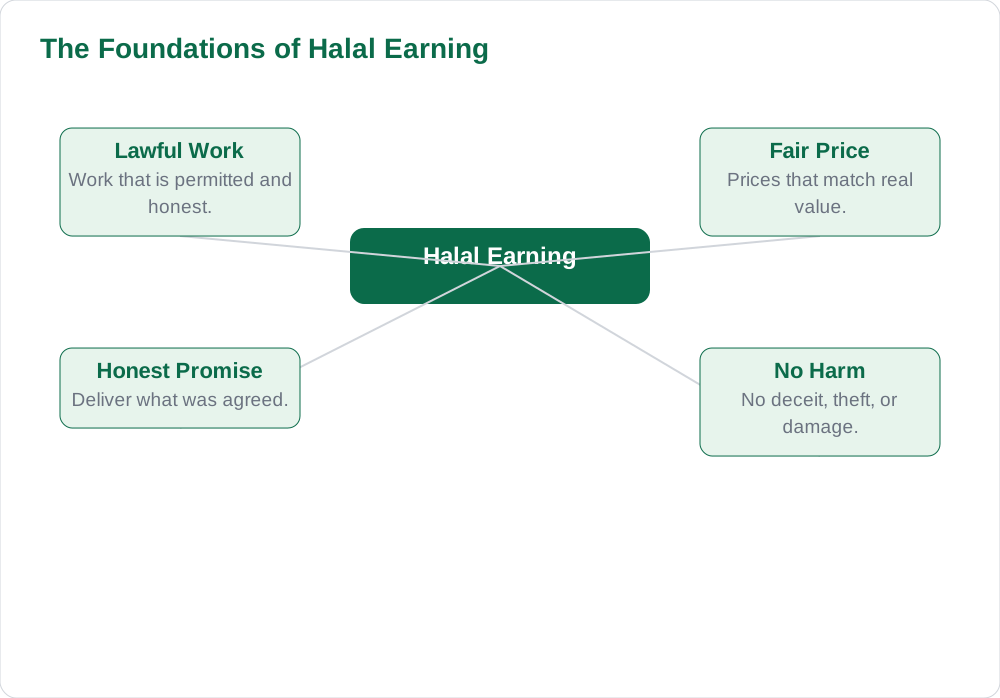
Halal earning means income gained through work that is lawful, honest, and fair. The worker delivers what was promised, charges a fair price, and avoids deceit, theft, or harm. Halal earning also respects other people's rights: workers are paid fairly, customers receive what they paid for, and no one is tricked into a bad deal.
The opposite is earning through cheating, such as lying about quality, hiding defects, or taking money without doing the work. Such income may look easy, but it damages trust and reputation. People soon avoid dishonest sellers, while honest workers earn repeat customers and lasting respect. The solved notes can help you revise the lesson's key ideas.
- Lawful work: the job itself is lawful and honest.
- Fair price: charge what the work or product is worth.
- Honest promise: deliver what you said you would deliver.
- No harm: avoid deceit, theft, or damage to others.
Honest Work and Dignity
All honest work carries dignity, whether it is farming, teaching, shopkeeping, driving, or cleaning. Dignity comes from effort, skill, and honesty, not from the title of the job. A pupil who respects every honest worker learns to value labour and to treat workers with courtesy.
This respect matters in daily life. Greet workers politely, pay promptly for services, and thank people for careful work. Do not mock a job because it looks simple. Many essential jobs look simple but require skill, patience, and long hours. Honest work deserves honour, whatever its form.
Fair Dealing With Customers
Fair dealing means telling the truth about what you sell. If a product has a defect, say so. If a service will take longer, explain the delay honestly. Customers may accept a delay, but they rarely forgive being misled. Honest sellers build trust that brings customers back again and again.
Fair dealing also means keeping accounts honestly. Do not overcharge, hide extra fees, or change agreed terms without telling the customer. Write down important agreements when possible, and keep receipts. These habits protect both sides and prevent quarrels. For more study support, explore the books and the blog.
- Tell the truth about quality, defects, and delays.
- Charge the agreed price without hidden extras.
- Keep receipts and simple written records.
- Correct a billing mistake promptly and honestly.
School Habits That Prepare Honest Workers
School is where honest-work habits begin. Completing your own homework, refusing to copy, and admitting mistakes all train you for honest livelihood. So does returning borrowed items, sharing credit in group work, and refusing to cheat in exams. These habits feel small now, but they shape the worker you will become.
Money habits matter too. Save part of any pocket money, spend thoughtfully, and avoid borrowing what you cannot repay. If you run a small school project, such as selling handmade cards, practise fair pricing and honest advertising. The companion guide on honesty in business gives market examples that build on this lesson.
Why Honest Livelihood Builds Trust
Honest livelihood builds trust in families, neighbourhoods, and markets. When people trust a worker, they recommend that worker to others, offer more work, and pay fairly. Trust is a form of wealth that cannot be bought quickly. It grows through years of honest dealing and can be lost through one serious act of cheating.
For pupils, the lesson is clear: choose work you can be proud of, keep your promises, and treat money as a trust. If you are unsure whether an earning method is lawful, ask a parent or teacher and check your STBB book. Honest questions now prevent costly mistakes later.
AI Help: Muse AI
Muse AI is Meta's personal AI assistant, and it can help you explore halal earning by explaining fair pricing, honest advertising, and simple record-keeping in plain language. Muse AI does not give official STBB answers — always verify against your STBB book and your teacher. Always check any lesson summary against your Sindh Textbook Board book before using it in class.
Join Muse with invite code LTGSWD — in the Muse app, go to Settings > Redeem token and enter the code.
Disclosure: LTGSWD is the author's Muse invite code.
5 key points you must know
- Halal earning means lawful, honest work that harms and cheats no one.
- All honest work carries dignity, whatever its title or form.
- Fair dealing requires truth about quality, price, and delays.
- School honesty habits prepare pupils for honest livelihood.
- Trust from honest dealing is lasting wealth that cheating destroys.
Frequently asked questions
What is halal earning?
It is income from lawful, honest work: fair prices, honest promises, no deceit or theft, and respect for customers, workers, and agreements.
Why does honest work bring dignity?
Because dignity comes from effort, skill, and honesty. Every lawful job that serves others deserves respect, whatever its title.
What is fair dealing with customers?
It means truthful descriptions, agreed prices without hidden extras, honest records, and prompt correction of billing mistakes.
How can pupils practise honest earning habits?
Do your own work, refuse to copy, admit mistakes, share credit fairly, save thoughtfully, and price any small project honestly.
Solved notes — preview free
These guides work best with the solved exercises. Preview the solved notes free on this website — 119 solved notes for Classes 6–10 in Sindhi, Urdu, English and Arabic medium. Or browse the full solved notes catalogue for your class and medium. New solved notes are added regularly — check the catalogue for coming-soon books.