Microorganisms, Disease, and Hygiene for Pupils
This guide covers microorganisms disease hygiene pupils need to understand, beginning with a simple fact: microorganisms are tiny living things that are too small to see without a microscope. They include bacteria, viruses, fungi, and protozoa. Some are useful, such as bacteria that help make yoghurt or fungi that help break down dead material. Others can cause disease if they enter the body and grow. This guide explains the main types of microorganisms, how they spread, and which hygiene habits prevent common illnesses. It is written for STBB pupils in Classes 6 to 10 and links biology to everyday habits you can practise at home and school.
Types of Microorganisms
Bacteria are single-celled organisms. Some bacteria cause illnesses such as typhoid or throat infections, while others are useful in food making and in the soil. Viruses are much smaller than bacteria and can only reproduce inside a living host cell. They cause illnesses such as flu, measles, and the common cold. Fungi include yeasts and moulds. Some fungi cause skin infections, while others are used to make bread or to produce medicines. Protozoa are single-celled organisms that can live in water and soil, and some cause diseases such as malaria.
It is important not to confuse all microorganisms with disease. Many are harmless or helpful. Bacteria in your gut help digestion. Fungi and bacteria help decompose dead plants and animals, returning nutrients to the soil. This links to Energy Flow in Ecosystems for Biology Pupils, where decomposers play a key role. When you answer a question about microorganisms, name the type, give one example, and say whether it is useful or harmful. That structure makes your answer complete.
How Germs Spread
Germs spread in several ways. They can spread through the air when a sick person coughs or sneezes. They can spread through contaminated water or food. They can spread by direct contact, such as touching an infected person or sharing towels. They can spread through insect bites, such as mosquito bites that carry malaria. They can also spread through cuts in the skin if wounds are not cleaned. Understanding these routes helps you choose the right prevention.
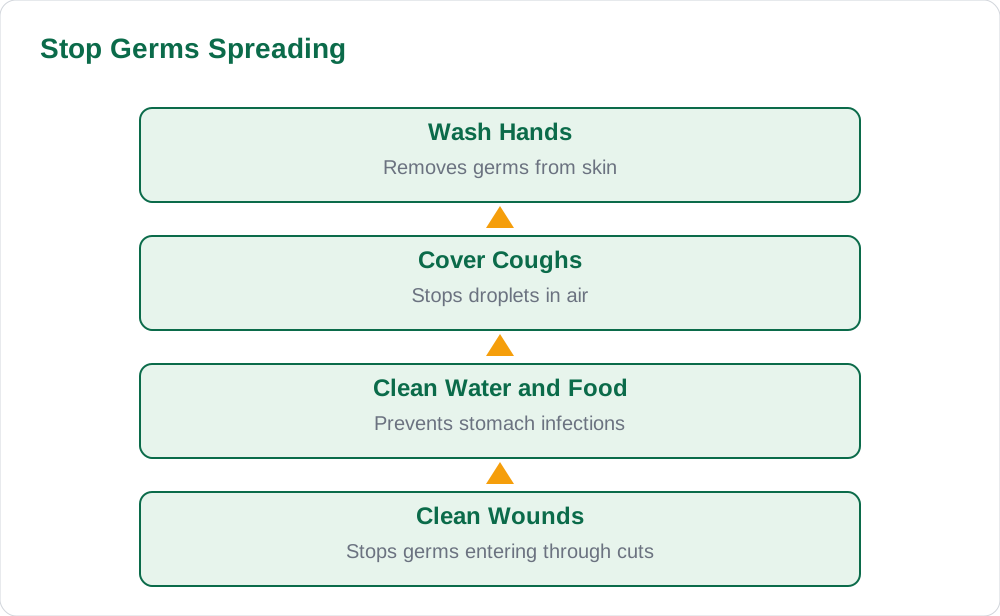
A common school example is the spread of cold and flu. Droplets from a cough can land on desks, door handles, or hands, and another pupil can pick them up. That is why covering your mouth when you cough, washing hands, and not sharing water bottles matters. In food handling, germs from dirty hands or unclean water can cause diarrhoea. Always use clean water and wash fruit and vegetables. These links show that biology is not abstract; it explains why everyday rules exist.
Hygiene Habits That Prevent Illness
Handwashing is the single most effective habit. Wash hands with soap and clean water before eating, after using the toilet, after playing outside, and after handling animals or waste. Wash for at least 20 seconds, covering palms, backs, between fingers, and under nails. Dry hands with a clean towel. If soap is not available, use clean water and ask a teacher or parent for soap as soon as possible. This one habit prevents many stomach and respiratory infections.
Other habits matter too. Brush teeth twice a day, bathe regularly, keep nails short and clean, and wear clean clothes. Cover coughs and sneezes with your elbow or a tissue, and throw tissues away. Keep drinking water covered and clean. Do not share personal items such as toothbrushes or towels. Keep food covered to protect it from flies and dust. At school, keep your desk and classroom clean and report any spills or waste. These habits are simple, but they make a real difference. For food safety links, see Food Tests and Nutrients: A Pupil Guide.
Vaccination, Clean Water, and the Environment
Vaccination is a way to protect the body against certain diseases. A vaccine teaches the immune system to recognise a germ so it can fight it quickly if it enters later. Vaccines have helped reduce diseases such as polio, measles, and tetanus. Your school or health centre may organise vaccination days. Always follow your parents and health workers advice and keep your vaccination record safe. Vaccination protects you and also helps protect others who cannot be vaccinated.
Clean water and a clean environment also prevent disease. Use safe drinking water, keep toilets clean, and dispose of waste properly. Mosquitoes breed in standing water, so empty old pots, tyres, and containers that collect water. Keep food waste in covered bins. These actions reduce the places where germs and disease-carrying insects can grow. When a question asks how to prevent a water-borne disease, mention clean water, handwashing, and safe food storage together.
What to Do When You Are Ill and Revision Tips
If you feel ill, tell a parent or teacher early. Rest, drink clean water, and follow medical advice. Do not take medicines on your own or share medicines with others. If you have fever, vomiting, diarrhoea, or a rash, stay home to rest and to avoid spreading illness to classmates. Keep your room clean and wash hands often. These steps help you recover and protect others. Biology teaches you that early care and hygiene are part of treatment, not just medicine.
To revise, make a table with four columns: microorganism type, example disease, how it spreads, and how to prevent it. Fill it from memory, then check against your Sindh Textbook Board book. Practise explaining in two sentences why handwashing prevents disease. Use solved notes on Solved Notes to check model answers and the book list on Books to find your class book.
AI Help: Muse AI
Muse AI is Meta's personal AI assistant, and it can help with hygiene revision by turning each spread route into a matching prevention habit you can test yourself on. Muse AI does not give official Sindh Textbook Board answers — always verify against your Sindh Textbook Board book and your teacher.
Join Muse with invite code LTGSWD — in the Muse app, go to Settings > Redeem token and enter the code.
Disclosure: LTGSWD is the author's Muse invite code.
5 key points you must know
- Microorganisms include bacteria, viruses, fungi, and protozoa.
- Some microorganisms are useful; others can cause disease.
- Germs spread through air, water, food, contact, insects, and cuts.
- Handwashing with soap is the most effective prevention habit.
- Vaccination, clean water, and clean surroundings reduce disease.
Frequently asked questions
What are microorganisms?
Microorganisms are tiny living things too small to see without a microscope, including bacteria, viruses, fungi, and protozoa.
Are all microorganisms harmful?
No. Many are useful, such as bacteria in yoghurt making and fungi and bacteria that decompose dead material.
How does handwashing prevent disease?
Handwashing with soap removes germs from hands so they are not transferred to mouth, food, or other people.
How can mosquitoes be controlled?
Remove standing water where mosquitoes breed, cover water containers, and use nets and repellents as advised.
Solved notes — preview free
These guides work best with the solved exercises. Preview the solved notes free on this website — 119 solved notes for Classes 6–10 in Sindhi, Urdu, English and Arabic medium. Or browse the full solved notes catalogue for your class and medium. New solved notes are added regularly — check the catalogue for coming-soon books.